


The Roastery & Cafe
Mon-Fri: 7-5
Sat-Sun: 8-4
Night Swim Coffee
Couldn't load pickup availability
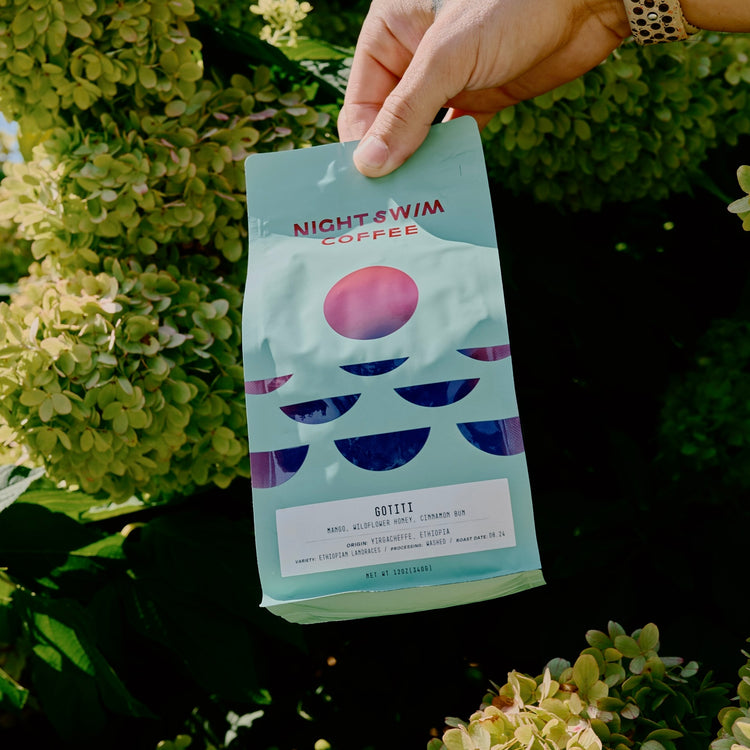
COMMUNITY: Gotiti
LOCATION: Gedeb, Yirgacheffe, Ethiopia
ALTITUDE: 2000-2100 MASL
VARIETY: Ethiopian Landraces
PROCESS: Washed
Tasting Notes: Mango, Wildflower Honey, Cinnamon Bun
Ethiopia’s Yirgacheffe region is one of the best-known coffee-producing regions in the world. Like the rest of Ethiopia, it’s divided into several woredas (districts) and kebeles (communities) with washing stations throughout—each offering unique terroir. The Gedeb woreda is one of them, and within it lies the Gotiti kebele.
Farmers here transport their coffee via mule or on foot to the washing station in Gotiti. This washing station started in 2023 on 2.5 hectares of land, currently processing an annual total volume between 500–600 tons of clean green coffee. 868 farmers deliver cherry to this washing station.
They meticulously wash, pulp, ferment and dry their coffees, leading to a superb final product. After processing, the coffee is stored safely to preserve the quality of parchment until it is moved to the dry mill. Fully dry parchment is packed in bags and either moved to the parchment store or bulked in conditioning bins.
To maintain traceability along with quality, they’re careful about lot separation. They collect coffee cherry alongside supplier name, original location, and quantity and keep thorough records as the coffee moves through processing.
The people of Gotiti belong to the Gedeo cultural tradition and speak various dialects of the Gedeo language. Their main income source is coffee, which they grow on very small farms ranging from 0.1 to 2 hectares. Many intercrop with false banana trees and acacias as shade for the coffee trees. Although formal fertilizer use is rare in this area, acacia trees are leguminous and fix nitrogen in the soil.
Life isn’t easy for Gotiti producers, but they still have a lot working in their favor. They live in a gorgeous, communal village within a very lush forest. This forest, the altitude of the area, and the indigenous varieties that grow here create the perfect environment for smaller, tastier coffee beans with distinct, elegant, and floral profiles.

Mon-Fri: 7-5
Sat-Sun: 8-4
Mon-Fri: 7-7
Sat-Sun: 8-6
Mon-Fri: 7-5
Sat-Sun: 8-5
Mon-Fri: 7-6
Sat-Sun: Closed
Mon-Fri: 7-3
Sat-Sun: Closed
Mon-Fri: 7-5
Sat 8-6
Sun 8-5
Mon-Fri: 7-3
Sat - Sun 8-4


